
The Subcontractor’s Guide to Increasing Profits Through Better Documentation
What eats subcontractor profits?
Ask 10, and you’ll get consistent answers across the board: labor shortages, rising material costs, compressed schedules, and delayed payments.
Documentation likely won’t even be mentioned, even though it’s often the root cause.
It doesn’t make the list because most subcontractors view documentation as a necessary admin task. But in reality, it takes a lot of time away from the work itself.
If we reframe documentation as a profitability driver, we can protect the schedule, reduce liability, strengthen relationships with the GC, and ensure you are paid appropriately for the work you do.
The most successful subcontractors document because they know that by establishing a record, they reduce risk, build trust, and create opportunities to win more work.
This guide details four critical areas in which documentation can directly impact the bottom line.
We’ll discuss daily reports, RFI turnaround, change order management, and connect them all to long-term profitability, and wrap up with a few actionable tips to help you make documentation a part of your daily routine.
Chapter 1: Daily reporting
Daily reports are often treated like project diaries. At the end of the day, someone fills out a form, notes the weather, records the headcount, and moves on.
When they’re done well, however, daily reports can be one of the most significant communication tools there is.
Every report tells a story. It details progress, documents work completion, who was on site, what equipment they used, any challenges that arose, and what conditions, if any, affected productivity.
More importantly, the report communicates to the GC that work is progressing as expected. They can’t always be there to see what’s actually going on, so the report becomes pivotal to their reporting and planning.
Daily reporting tells you whether you’re on track, if any issues need attention, and whether the day's work will create delays or opportunities. With a strong, detailed daily report, there’s no ambiguity, less back-and-forth, and fewer disputes.
Providing this has a strong impact on the GC-subcontractor relationship. The less time the GC has to spend chasing updates or getting clarification, the happier they’ll be, and the more likely they are to award future contracts to the sub. Confidence builds trust, and that almost always translates into more work.
When a subcontractor is known for reliable communication and accountability, their reputation builds across projects, and business thrives.
So, instead of viewing daily reports as an admin burden, see it as providing evidence that your company is reliable, organized, and committed to the project’s success.
Chapter 2: RFIs and why fast turnarounds matter
RFIs need to be turned around quickly, as scheduling and other decisions are affected.
If conditions differ from the contract, trades need answers before the work can continue. A quick turnaround on RFIs is critical here, as a delayed response can create bottlenecks that affect multiple trades and may set the entire job back.
Subcontractors are not always responsible for how quickly an RFI is turned around, but they are expected to prepare, submit, track, and document it efficiently. Ultimately, the faster the RFI gets to the right person, the sooner the issue can be resolved.
A properly prepared and submitted RFI also protects the subcontractor when disputes arise.
When delays occur, there are inevitably questions that will be asked: when was the issue flagged? When was the RFI submitted? Was the follow-up documented? How long did it take to get a response?
When RFI records are organized, answering these questions is easy, and you’ll have proof to substantiate. If you’re still relying on email chains, texts, or verbal directives and memory, you will struggle to provide the proof needed to settle the matter.
GCs notice which subcontractors make their lives easier.
When your RFI submissions come complete with detailed descriptions, substantiating photographs, and relevant documentation, it eliminates the back-and-forth you’d encounter otherwise and helps to resolve issues more efficiently.
Your attention to detail and respect for the GC’s needs in responding to the RFI help you build trust, as they’ll know you are committed to keeping schedules moving.

Chapter 3: Clean change order trails and protecting the margin
Poorly documented change orders are easily the biggest drain on subcontractor profitability.
Almost every project will evolve once the work begins, and if it does, change orders are inevitable. Designs will be revised, owners will make new requests, or coordination issues or field conflicts may create additional work.
Extra work isn’t the problem here, but getting paid for it might be.
If you don’t have a repeatable change order process, small changes will accumulate. Crews will often keep working to ensure the project moves along, but if the paperwork doesn’t catch up, it might be impossible to recover those costs.
Ditto if the change orders were not completed properly or officially approved. It’s exceedingly hard to prove things weeks or months after the fact, as the GC may have already billed the client and classified your extra work as “included in the initial scope.”
Strong documentation helps you establish a paper trail as soon as the change is identified.
Field workers document the issue with photographs and notes; GC’s superintendent signs off on the T&M ticket on the jobsite; project managers submit change requests promptly; and approvals, pricing, and any related correspondence are tracked.
Having a verifiable timeline protects your margin in several ways:
- There is never a question about whether the work was done or approved.
- It details when the changes occurred and how they affected labor, materials, equipment, scheduling, and related areas.
- It supports invoicing and reduces payment delays.
Most importantly, it prevents scope creep from becoming “free” work, and that’s a bottom-line issue.
Chapter 4: Connecting documentation discipline to profitability
While we might view RFIs, change orders, and daily reports as separate admin tasks, they’re actually connected by a common purpose: protecting time, money, and trust.
Daily reports preserve the history of work performed. You’ll experience fewer misunderstandings, improved communication, and greater visibility to help keep the project on track.
Properly managed RFIs protect the schedule by moving queries through the project and providing documentation when it affects the timeline.
Efficient change order management protects the bottom line by ensuring additional work is recorded, priced, and approved before it becomes a forgotten issue.
Each of these processes has a direct correlation to profitability on its own. Together, they establish operational efficiency, which is something even more valuable as it reduces risk, puts time back in your day, and ensures the money ends up where it belongs.
Project managers spend less time looking for information. Accounting has clean records to support billing. Field supervisors don’t have to rely on memory to recreate events or conversations.
Company leaders gain confidence in their processes and build a reputation with GCs as a trade contractor that consistently steps up. That confidence invariably turns into lucrative long-term relationships.
All things considered, we can say that documentation is both a defensive measure and a competitive advantage.
In an industry where the quality of work is called into question, the subcontractors that stand out are the ones who make everyone’s lives easier. Profitability isn’t just about the number of projects you win; truthfully, you can be super busy, do great work, and still lose money.
It’s more about how well each job is executed, how well you protect every dollar earned, and the strength of the relationships you build along the way. These are the benefits of disciplined documentation.

Chapter 5: Building the habit
Now that we understand the value of documentation, it’s time to build the habit and make it consistent.
Ultimately, documentation issues don’t happen because employees are lazy or unwilling; they’re usually due to timing and complicated processes.
Foremen spend all day managing crews, coordinating deliveries, solving problems, and ensuring the work keeps moving along. By the end of the day, it’s challenging to recreate every little thing that happened from memory or to organize photos, conversations, email threads, texts, etc., and nobody wants to be filling out a form every time something happens.
It’s not a question of working harder, but making documentation easier. By building documentation into the day’s workflow, it becomes part of the process and not an afterthought or a burden.
Setting clear expectations is a great place to start:
- Daily reports are completed before crews leave the site.
- Photos are captured during the work vs. after installation.
- RFIs are initiated as soon as a question arises.
- Potential change orders are documented immediately and shouldn’t be delayed until the approval discussion.
Once you’ve standardized the documentation process, it’s baked into the workflow. All stakeholders have what they need and know where to find it if they don’t, and leadership gains confidence that every project is being completed to a consistent standard.
Technology plays a pivotal role here. Mobile accessibility eliminates friction, as field teams can document immediately rather than taking time out of their day to go to the trailer and complete the paperwork.
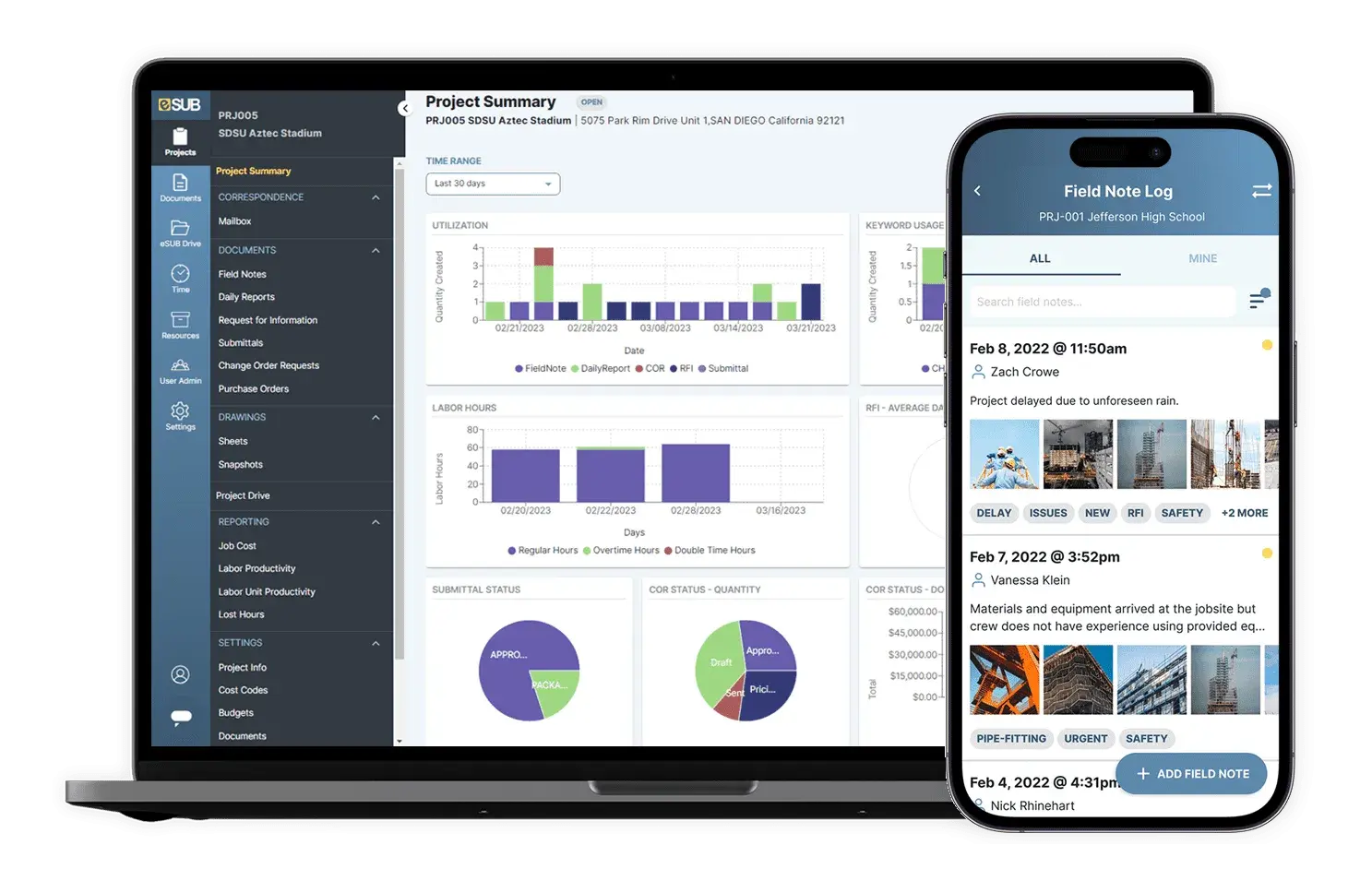
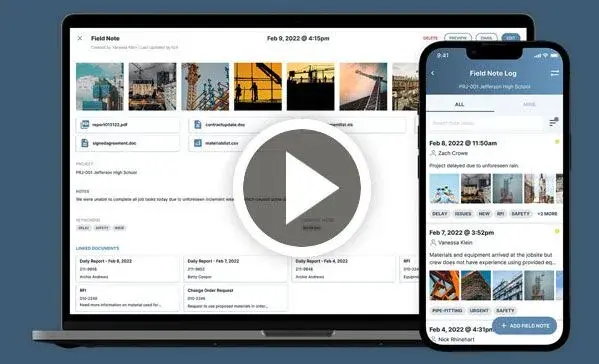
Essential data, like weather conditions, labor hours, equipment usage, photos, and notes, can be captured as it happens. Once entered, the information flows directly to project managers and the office. Everyone is working from a single source of truth, so there is no ambiguity.
eSUB is purpose-built for trade contractors and designed to address the realities they face daily. eSUB offers simple, user-friendly documentation solutions that help you increase profits, build a strong reputation, and fuel growth by creating a competitive advantage.
Make your documentation habits sustainable: request a demo of eSUB today.

Explore eSUB Document Control Features


Related Case Study

FREE CONSTRUCTION eBOOK